A Forest
Client
Bettina Stauber & Amaru Jarrin
Type
Residential
Location
Historic Center of Quito, Ecuador
Year
2021
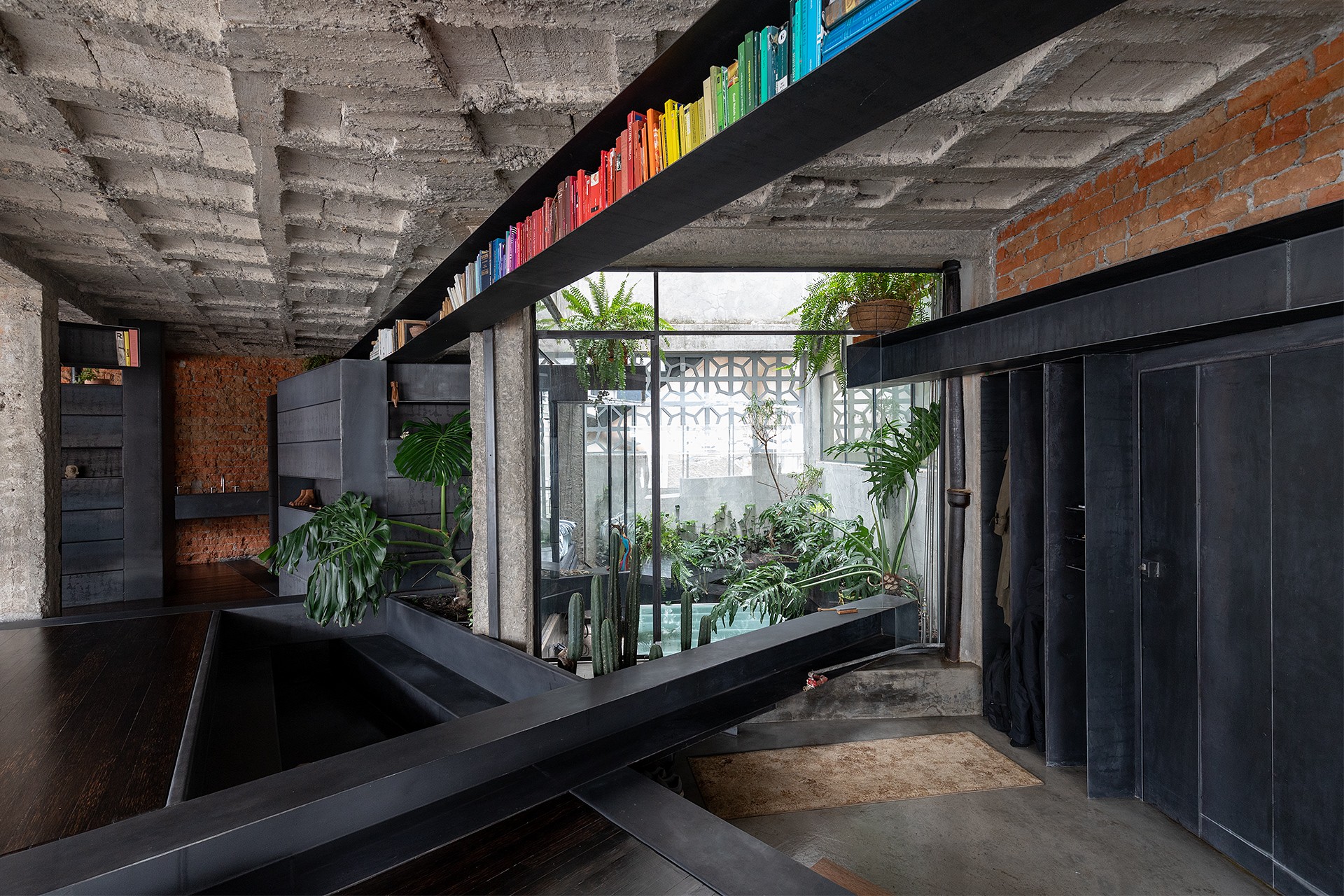
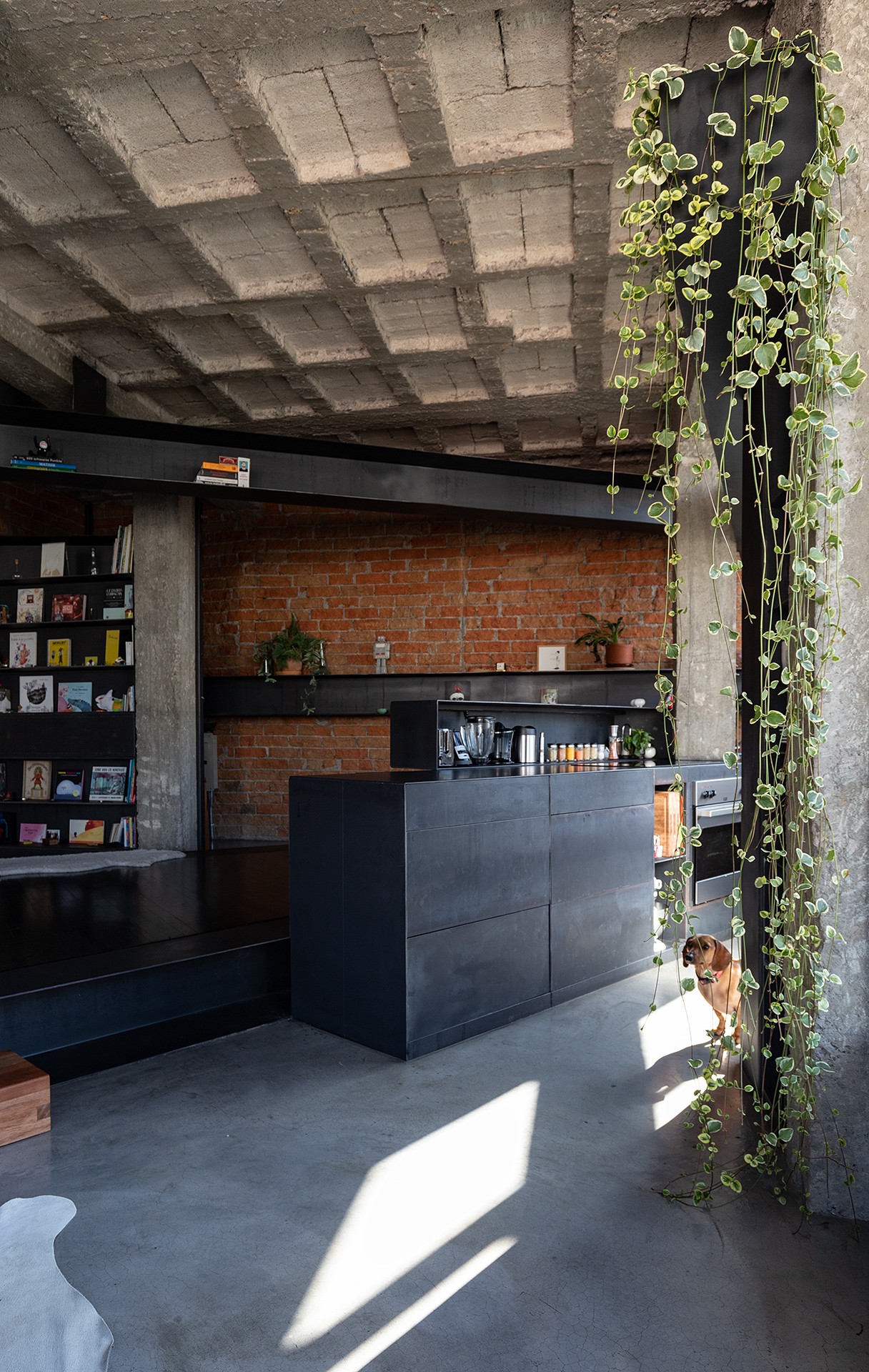
The Forest is an architectural intervention that redefines domestic space as a continuous spatial system rather than a sequence of fixed rooms. By removing all preexisting partitions, the project recovers the original structural reading of the apartment, leaving concrete columns, slabs, and material imperfections exposed as active elements. Structure is not concealed but inhabited.
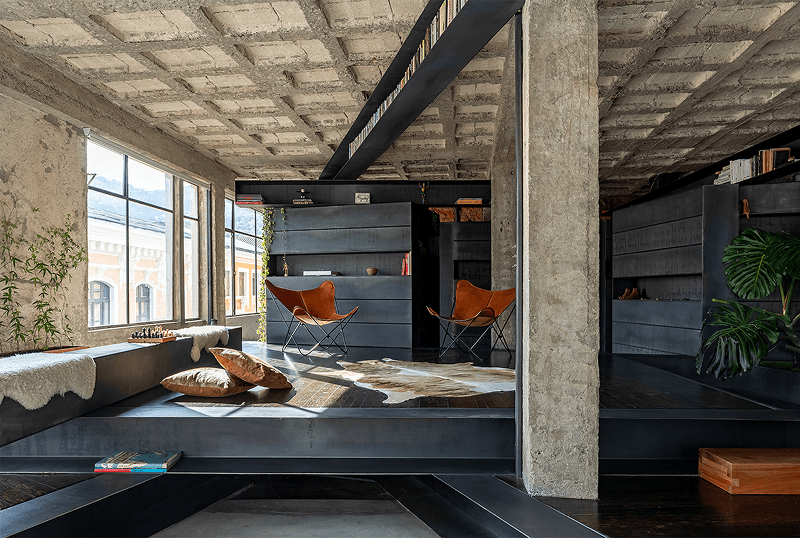
The space is reorganized through a single thin metal element that cuts diagonally across the plan and volume. Repeated in different positions, this folded system operates simultaneously as structure, furniture, storage, platform, and circulation device. Its formal lightness contrasts with its structural resistance, allowing it to articulate levels, organize movement, and define zones without full compartmentalization.
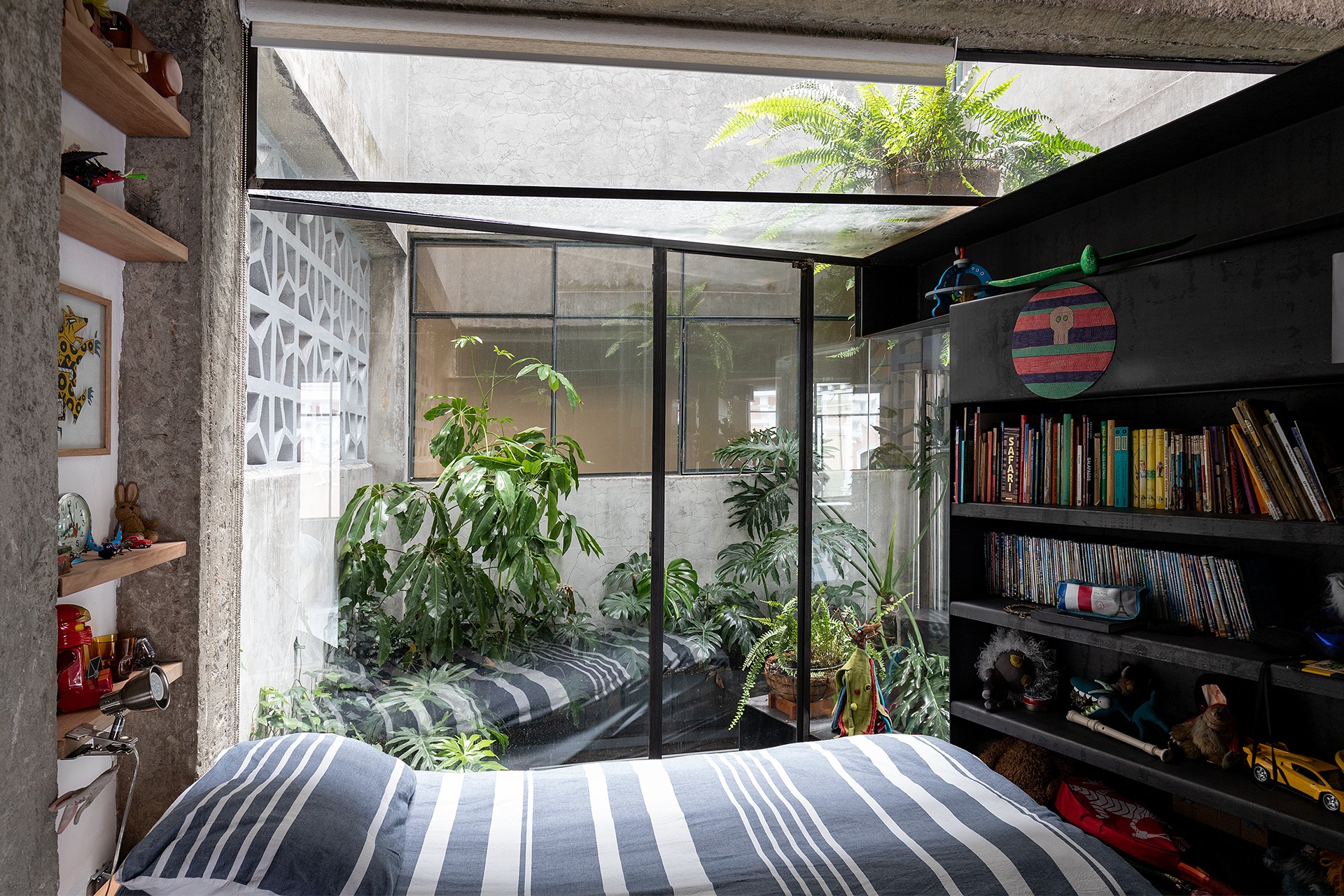
Rather than prescribing specific functions, the system introduces an open and improvised logic of use. Domestic activities overlap without hierarchy, enabling multiple modes of occupation over time. Kitchen, living area, garden, and water are understood as a single environmental ecosystem, reinforced by natural light, vegetation, and interior voids. Architecture here functions as a flexible framework, where ambiguity, continuity, and adaptation shape everyday inhabitation.
How wild can the domestic be?
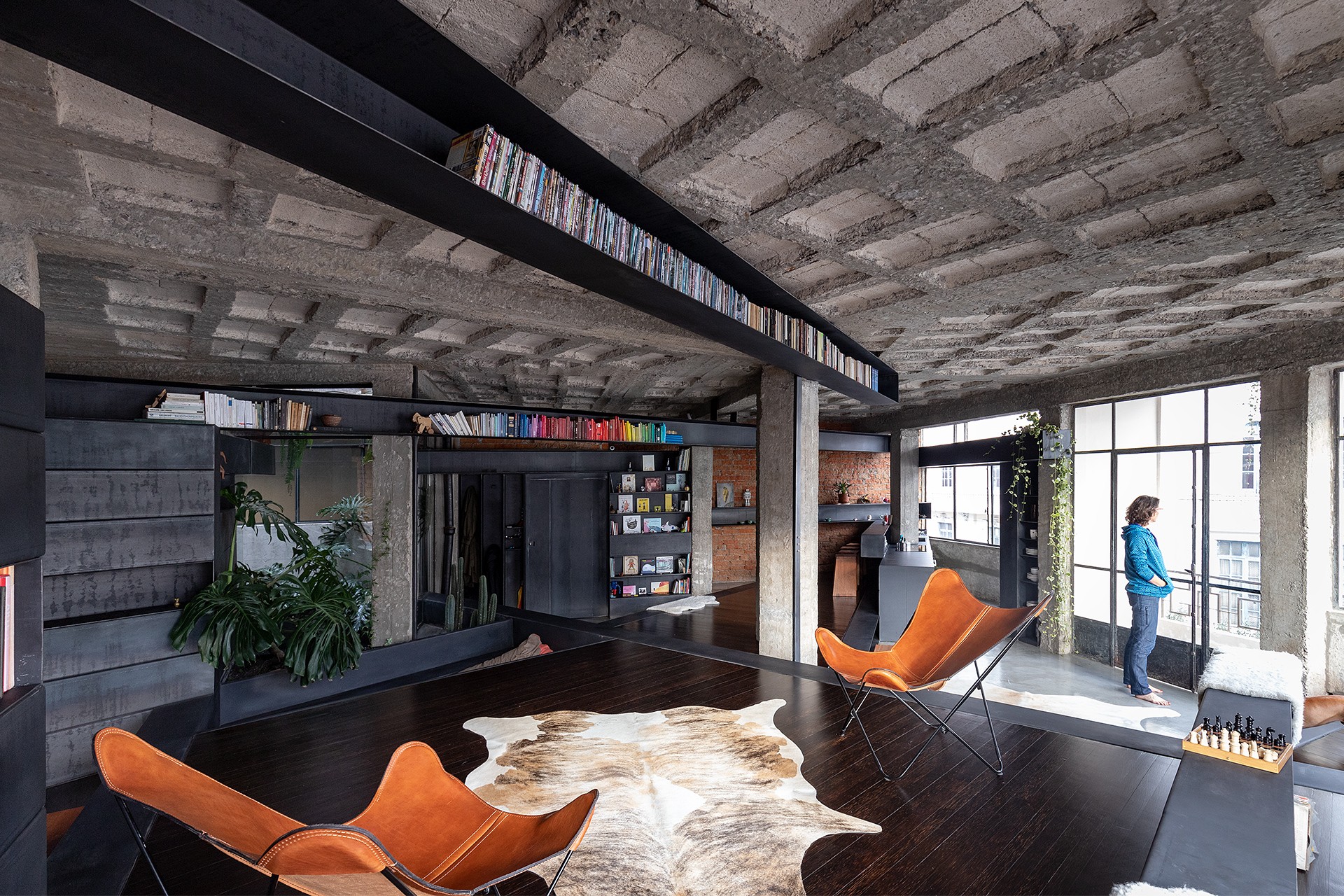
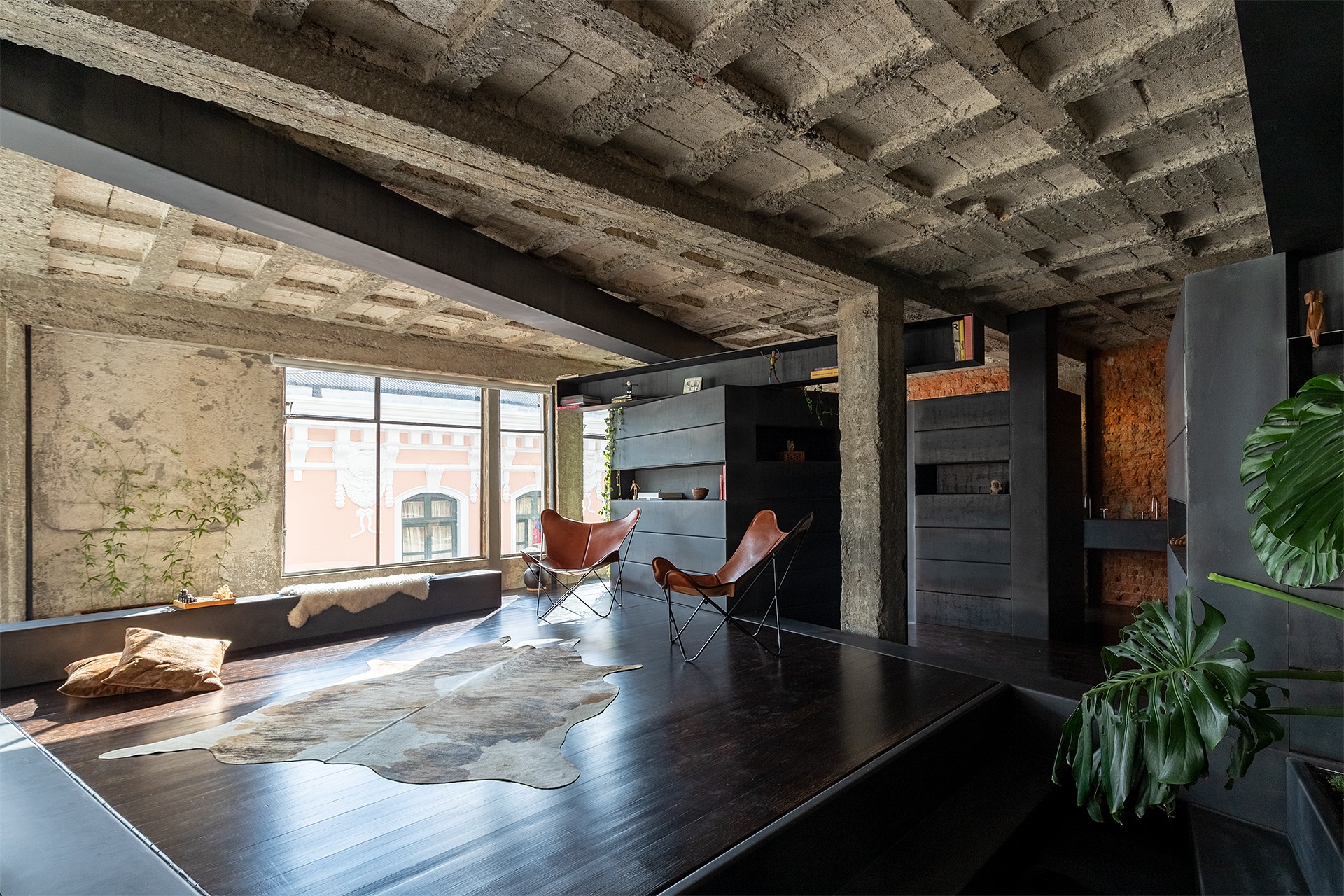
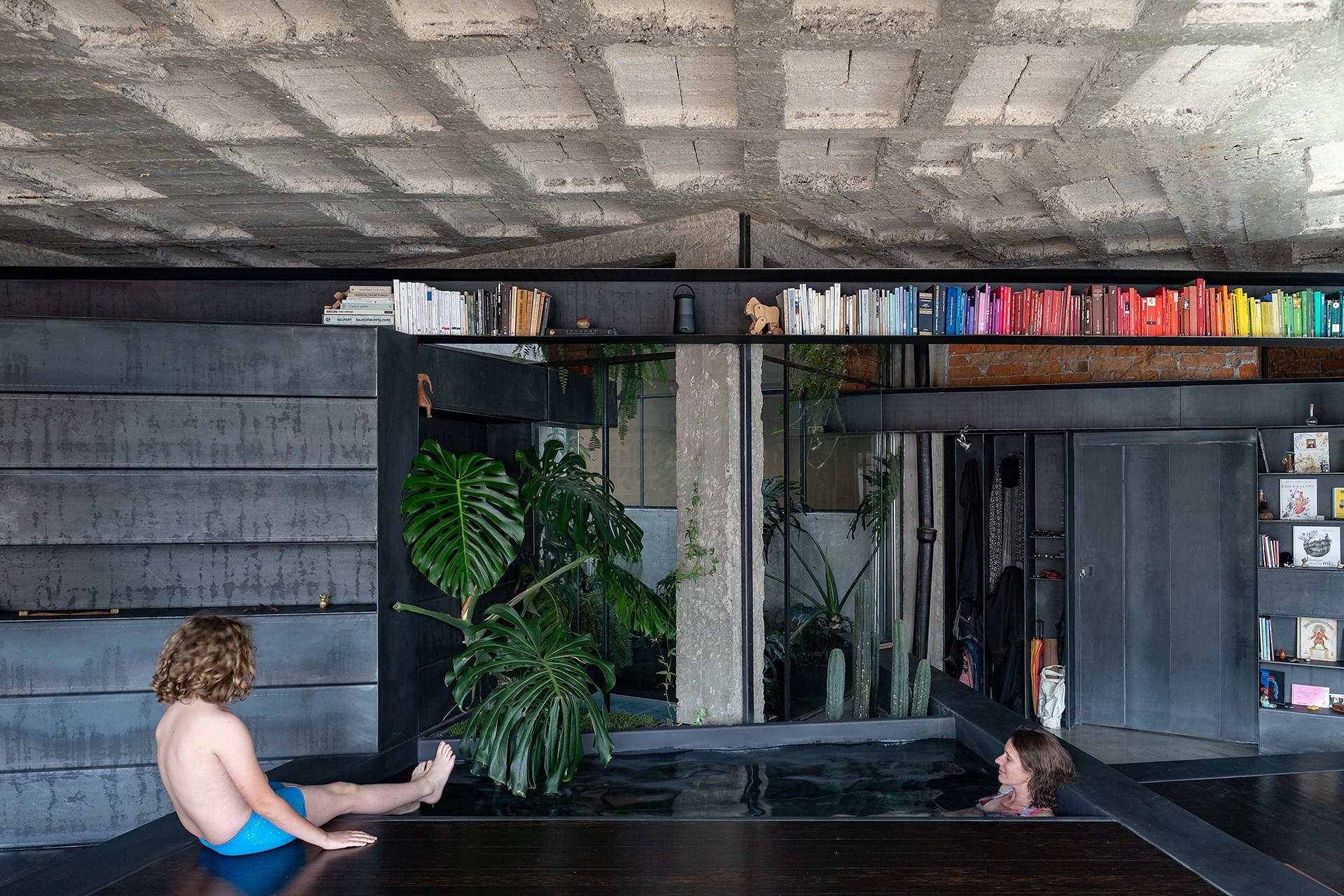
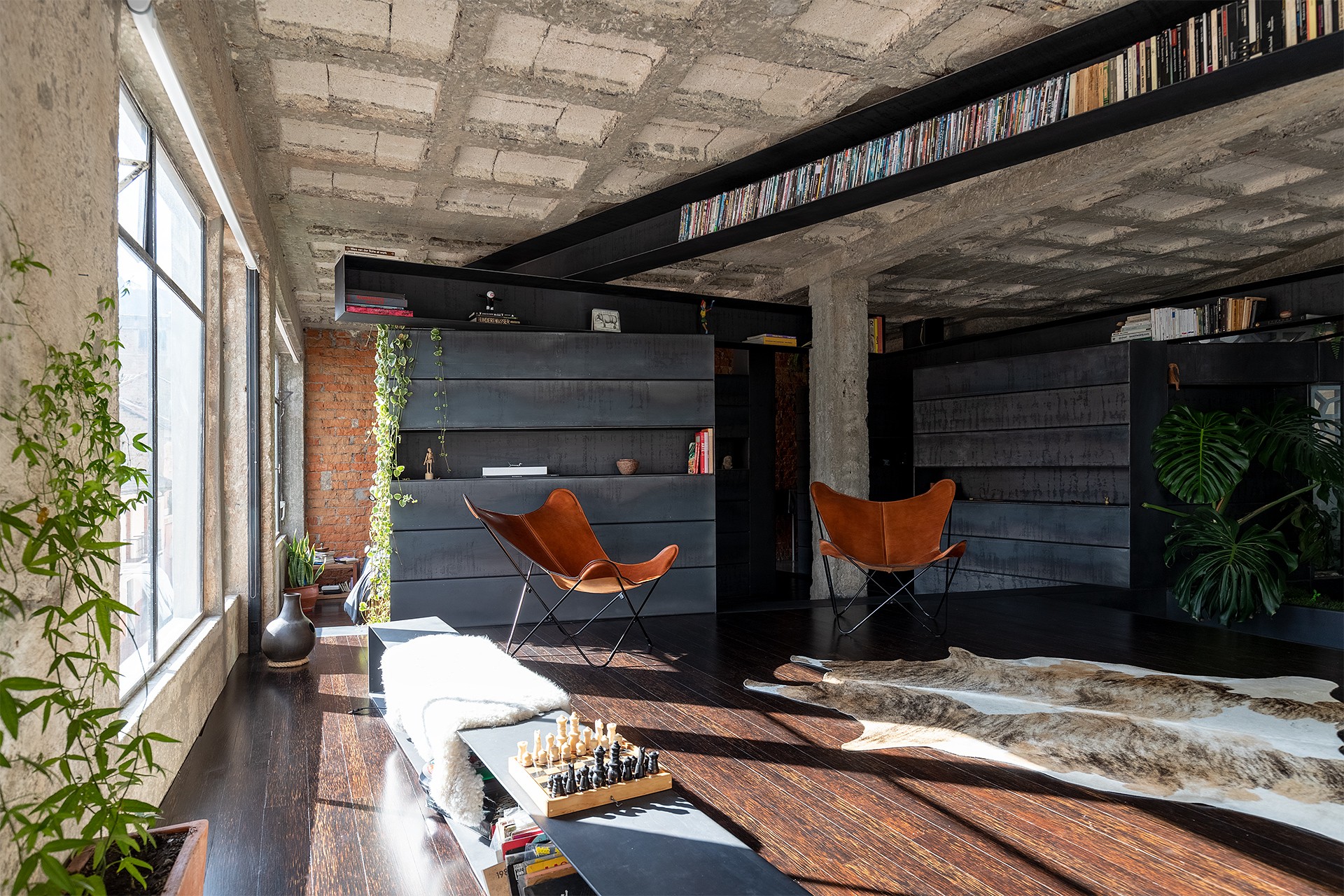
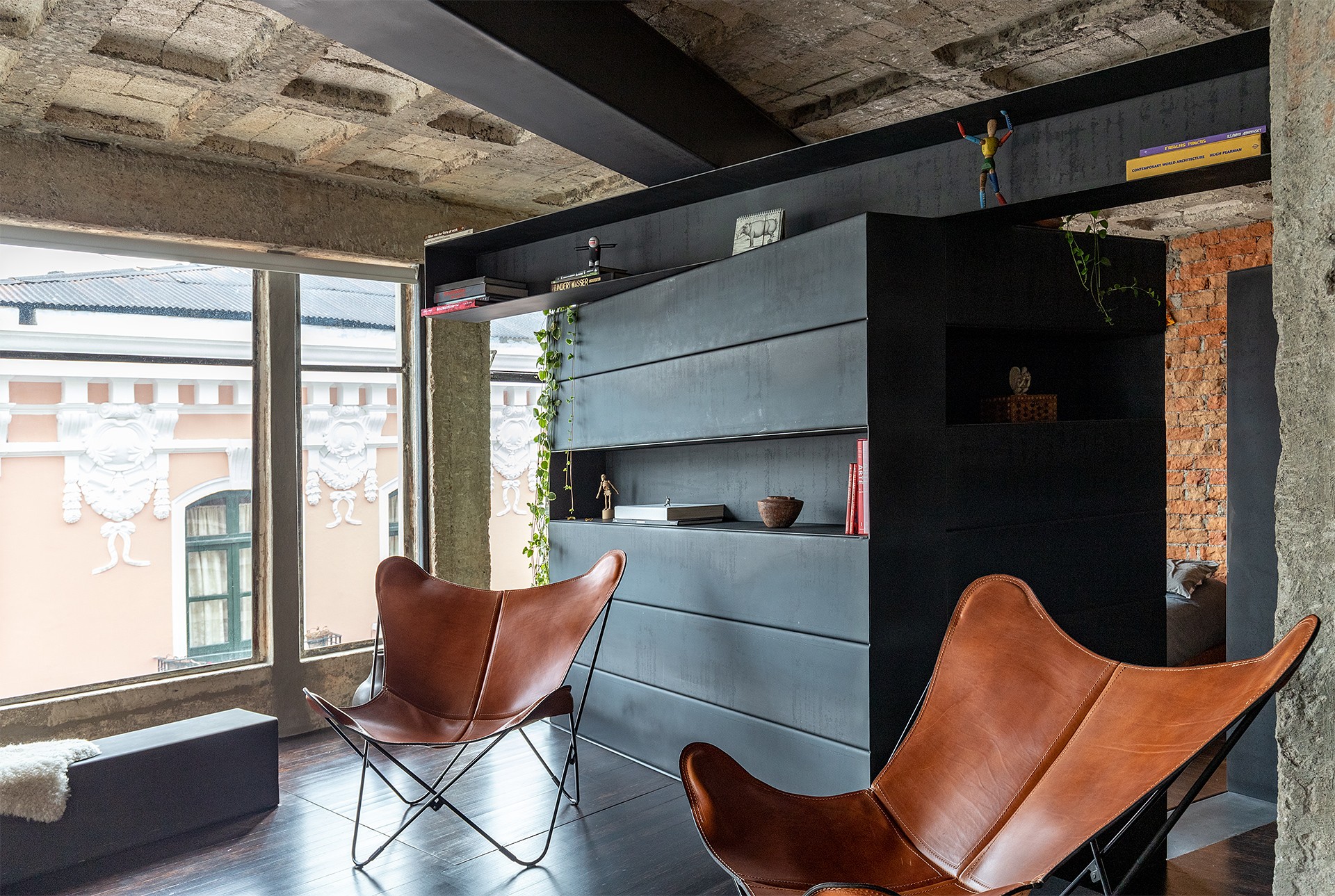
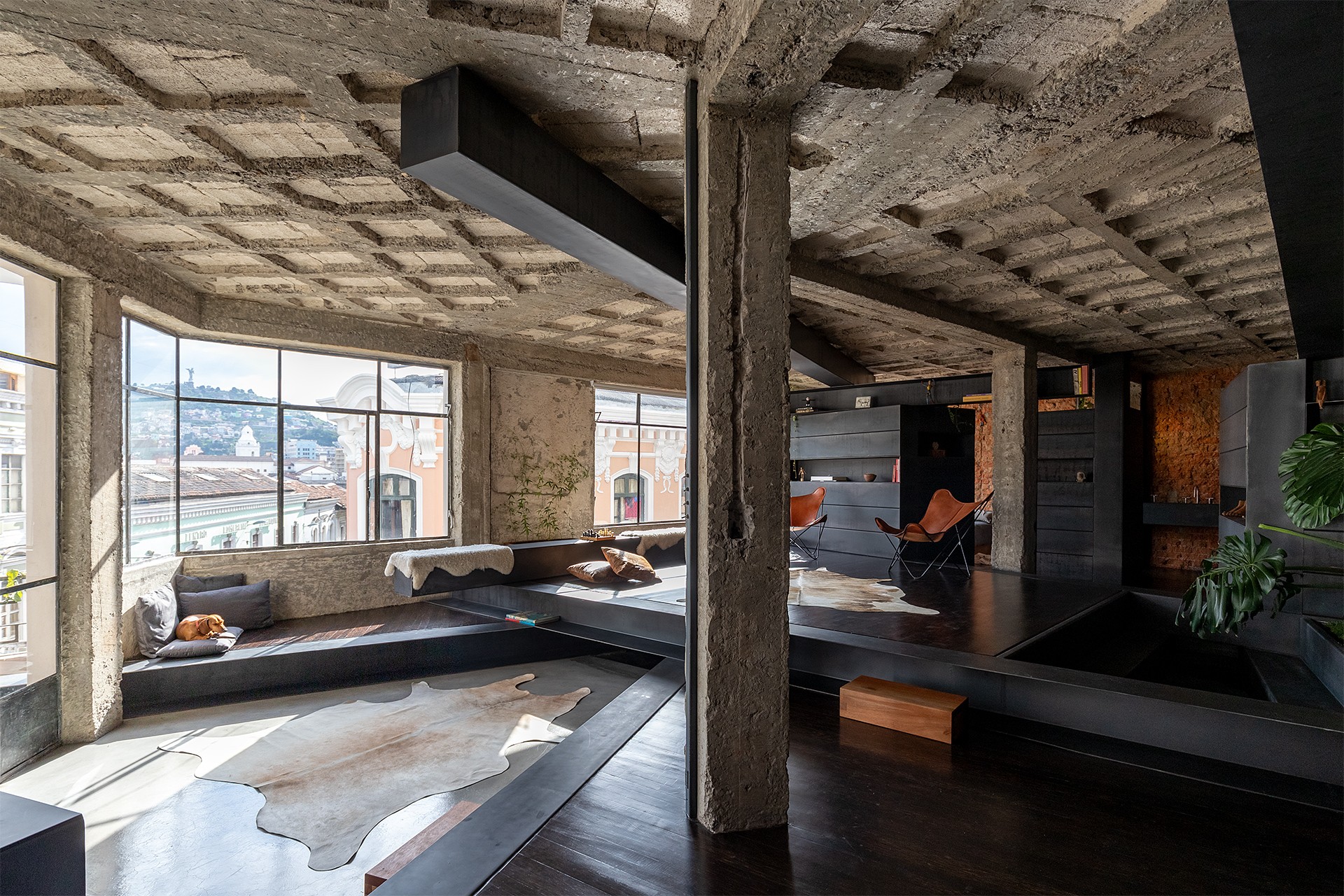
The Forest is an architectural intervention that redefines domestic space as a continuous spatial system rather than a sequence of fixed rooms. By removing all preexisting partitions, the project recovers the original structural reading of the apartment, leaving concrete columns, slabs, and material imperfections exposed as active elements. Structure is not concealed but inhabited.
The space is reorganized through a single thin metal element that cuts diagonally across the plan and volume. Repeated in different positions, this folded system operates simultaneously as structure, furniture, storage, platform, and circulation device. Its formal lightness contrasts with its structural resistance, allowing it to articulate levels, organize movement, and define zones without full compartmentalization.
Rather than prescribing specific functions, the system introduces an open and improvised logic of use. Domestic activities overlap without hierarchy, enabling multiple modes of occupation over time. Kitchen, living area, garden, and water are understood as a single environmental ecosystem, reinforced by natural light, vegetation, and interior voids. Architecture here functions as a flexible framework, where ambiguity, continuity, and adaptation shape everyday inhabitation.